Handy Intelligence - AI beyond the ChatGPT Syndrome
The ChatGPT Syndrome: Why Most People Misjudge AI’s True Potential
AI has never been more accessible. Tools like ChatGPT and Claude make it possible to interact with language models as if you were talking to a human. But this very simplicity leads to a widespread misconception we call the “ChatGPT Syndrome.”
It manifests in two extreme reactions—both rooted in a fundamental misunderstanding of AI’s actual capabilities and limitations.
1. The Disappointment: “AI Is Useless”
This group usually includes people who try ChatGPT once, challenge it with a complex problem—and are disappointed when no perfect solution comes out. The verdict is harsh:
“ChatGPT can’t save my marriage, so AI is completely useless.”
The problem isn’t with AI itself. Generic language models simply aren’t built to solve highly specific human challenges on the first try—especially not without context or structure.
These users often lack the technical background to assess what AI can and can’t do. When the first experience doesn’t meet expectations, the entire technology is written off prematurely.
2. The Overestimation: “AI Can Do Everything”
On the other side are users who are thrilled by early successes—say, when ChatGPT writes a convincing essay or summary—and draw inflated conclusions:
“ChatGPT writes me a physics essay—surely it can handle my entire accounting too!”
This enthusiasm is understandable, but misleading. Large language models can impress. But integrating them reliably and at scale into complex business processes is an entirely different challenge. Problems quickly arise that nobody anticipated:
- Inconsistent or contradictory answers to similar questions
- No long-term memory
- Difficulties with system integration
- Lack of explainability in results
The reason: these tools are generalists. And generalists don’t translate easily into precise, business-critical applications—not without targeted customization and combination.
Why This Problem Is So Common
What many don’t realize: There is a middle ground. And more importantly—the real power of AI lies not in blind trust in a single large model, but in a structured platform that orchestrates the right models for the right tasks.
We regularly encounter clients who don’t know that you can connect different AI models together—or that it’s even possible, and often necessary, to deploy specialized, smaller models for specific tasks. And even when this knowledge exists, there’s often no platform in place to actually make it happen—no way to manage agents, coordinate workflows, or keep data under control.
The reality is: No single AI can do everything perfectly. What you need is a system that brings the right pieces together.
This Is Why We’re Building a Platform
At Handy Intelligence, we started as AI consultants—helping businesses understand and apply AI. But we quickly realized that advice alone isn’t enough. Companies need infrastructure. A place where AI agents work together, where data flows are managed, and where results are reliable and traceable.
That’s why we’re developing the Handy Intelligence Platform—a system designed to run on your infrastructure, with your data, under your control. It brings together everything that makes AI work in practice:
- AI agents that collaborate autonomously—during the day to support your team, at night to process documents, update records, and prepare insights for the morning
- Structured workspaces for projects, documents, and data flows—so nothing gets lost and everything stays organized
- Custom-trained models integrated alongside general-purpose ones—each doing what it does best
- Full data sovereignty—everything runs locally or in your private cloud, nothing leaves your control
Three Pillars of Working with AI
Making AI work for your business isn’t just about technology—it requires a complete approach. That’s why everything we do rests on three pillars:
Understanding AI — Your team needs to know what AI can do, where the risks are, and how to work with it effectively. We provide hands-on training that builds real competence.
Applying AI — With the right platform, you can assemble AI solutions rapidly—connecting agents, data sources, and workflows into systems that actually run in production.
Training AI — Generic models have limits. Custom fine-tuning on your data, your terminology, and your processes creates models that are smaller, faster, and far more precise.
These three pillars work together. Understanding without application stays theoretical. Application without training stays generic. Training without understanding leads to misuse. The platform ties them all together.
AI That Works While You Sleep
One of the most powerful aspects of running AI on your own infrastructure: it never stops. During office hours, AI agents support your team with analysis, decisions, and automation. After hours, they shift to background work:
- Scanning archived emails and building richer customer profiles
- Parsing old documents and making them searchable
- Preparing summaries and reports for the next morning
All processed locally. All under your control. All ready when your team starts the day.
→ Learn more about Local AI and Data Sovereignty
How Does AI Actually “Think”?
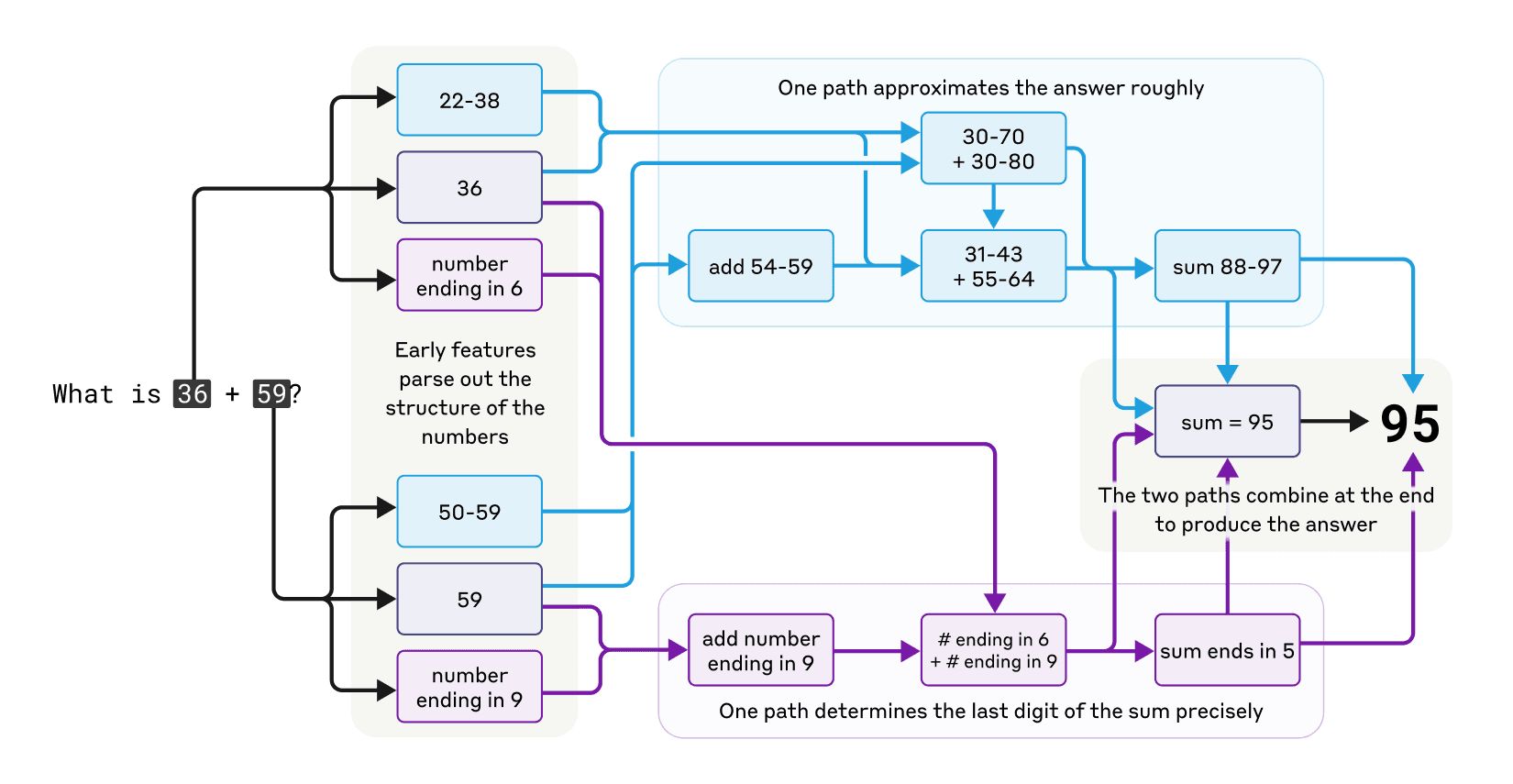
If you want to understand why AI is sometimes brilliant and sometimes way off, you need to look under the hood. Our article on Mechanistic Interpretability shows how Transformer models work internally—and why even simple arithmetic is a real challenge for them. A perspective that puts expectations in check and explains why tailored solutions matter so much.
→ Read the article: Transformers—Impressive, but Really the Future?
Ready for the next step?
Tell us about your project – we'll find the right AI solution for your business together.
Request a consultation